
Introduction
Accurate BigCommerce Data Layer Setup is essential for ecommerce businesses that want reliable tracking across GA4, Google Ads, and Meta Pixel. However, many BigCommerce stores rely on incomplete default tracking, which leads to missing purchase data, inaccurate attribution, and weak campaign optimization. As a result, businesses lose visibility into customer behavior and revenue performance. Therefore, implementing a proper data layer setup is critical for accurate ecommerce tracking and better ROI.
As a Stape Certified Partner, I specialize in building advanced ecommerce tracking systems using GTM, GA4, server-side tracking, and custom data layer implementations. Therefore, this ensures accurate data flow, stronger attribution, and reliable performance tracking across the full customer journey.
In this guide, you’ll learn how to implement BigCommerce Data Layer Setup using GTM and GA4 ecommerce tracking. As a result, you can track purchase events accurately, improve conversion attribution, and optimize marketing performance across multiple ad platforms. For advanced tracking systems, explore Google Ads First Party Server-Side Tracking with GTM & Stape and Meta Pixel & Conversion API Setup via GTM & Stape (Lead Event Tracking Tutorial). BigCommerce Data Layer Setup helps ecommerce businesses send structured purchase and user interaction data into analytics and advertising platforms for accurate conversion tracking.
🎥 Watch Now
Figure 1: BigCommerce Tracking Flow (BigCommerce → GTM → GA4 → Ads Platforms)
Struggling to track BigCommerce purchases accurately across GA4 and Google Ads?
Missing ecommerce events can reduce attribution accuracy and hurt campaign optimization.
👉 WhatsApp: https://wa.me/8801735749155
👉 Book a Call: https://zcal.co/zubayerislam01/consultation
What Is BigCommerce Data Layer Setup?
BigCommerce Data Layer Setup refers to implementing a structured JavaScript data layer that sends ecommerce events such as purchases, transaction values, products, and customer interactions into GTM. Then, GTM forwards this data to GA4, Google Ads, Meta Pixel, or server-side tracking platforms.
As a result, businesses gain accurate ecommerce tracking, improved attribution visibility, and stronger conversion optimization signals.
Why Is It Important?
Without proper BigCommerce Data Layer, ecommerce businesses often rely on incomplete platform tracking that misses critical purchase and conversion data. However, accurate attribution depends on structured ecommerce events and reliable event delivery. Therefore, proper implementation is essential for accurate reporting and campaign optimization.
- Track ecommerce purchases accurately
- Improve GA4 ecommerce reporting
- Strengthen Google Ads conversion attribution
- Support Meta Pixel and server-side tracking
➡️ Learn more: Google Ads First Party Server-Side Tracking with GTM & Stape.
Quick Answer
BigCommerce Data Layer Setup is implemented by adding GTM and custom ecommerce data layer scripts inside BigCommerce Script Manager. Then, GTM captures purchase events and sends them to GA4, Google Ads, and Meta Pixel for accurate tracking. As a result, ecommerce businesses gain reliable attribution and improved marketing optimization.
Key Takeaways
- BigCommerce default tracking may miss critical ecommerce events
- Custom data layer implementation improves purchase tracking accuracy
- GTM makes event tracking flexible and scalable
- GA4 enhanced ecommerce depends on clean ecommerce event data
- Google Ads conversion tracking becomes more reliable
- Meta Pixel tracking improves with structured ecommerce events
- Server-side tracking becomes easier with proper data layer implementation
- GTM Preview Mode is critical for validation
- Ecommerce attribution improves with better event architecture
- Accurate tracking supports stronger campaign ROI
Tools Used
- BigCommerce
- Google Tag Manager
- GA4
- Google Ads
- Meta Pixel
- GTM Preview Mode
- Google Tag Assistant
- Custom Data Layer Script
➡️ GA4 Ecommerce Tracking Setup Guide.
How the System Works
First, the custom ecommerce data layer script is added inside BigCommerce Script Manager. Then, ecommerce events such as purchases are pushed into the data layer during customer actions. Next, GTM captures these events and sends them to GA4, Google Ads, Meta Pixel, or server-side endpoints. Finally, businesses can measure ecommerce conversions accurately across analytics and ad platforms.
Why It Matters
If ecommerce tracking depends only on default platform integrations, purchase attribution may become incomplete and unreliable. As a result, optimization decisions may be based on inaccurate data. However, a proper BigCommerce data layer implementation ensures reliable ecommerce tracking and stronger performance measurement.
Prerequisites
✔ BigCommerce store access
✔ Google Tag Manager account
✔ GA4 property
✔ Google Ads account
✔ Meta Pixel (optional)
✔ BigCommerce Script Manager access
✔ Ecommerce tracking strategy
Step-by-Step Implementation
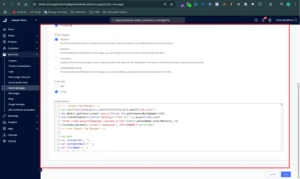
Step 1: Add GTM & Data Layer Script to BigCommerce
Log in to your BigCommerce Admin Panel.
Go to: Storefront > Script Manager > Create Script.
Name script: GTM Data Layer.
Placement: Header.
Location: All Pages.
Script Category: Essential.
Script Type: Script.
Paste your GTM Script & then paste the Data Layer code.
Click Save and Publish.
Figure 2: GTM and BigCommerce Data Layer
Step 2: Testing and Verification
Use Tag Assistant and GTM Preview Mode.
Place a test order in BigCommerce.
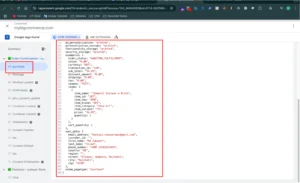
Ensure the purchase event fires with correct data.
Figure 3: BigCommerce Purchase Data Layer
Step 3: Final Publish & Deployment
Submit and Publish your GTM container.
Place a test order again to reconfirm everything is working.
Testing
Validate your BigCommerce ecommerce tracking setup before going live to ensure accurate purchase attribution and event delivery across all platforms.
✔ GTM container firing correctly
✔ Purchase event detected successfully
✔ Ecommerce values passed accurately
✔ GA4 purchase event received correctly
✔ Google Ads conversion tracking validated
✔ Meta Pixel purchase event verified (if configured)
✔ No missing ecommerce parameters in the data layer
Final Publish Step
After successful validation, publish your GTM container and perform one final live test order to reconfirm that all ecommerce events fire correctly. As a result, your BigCommerce Data Layer Setup will start sending accurate purchase, conversion, and attribution data across GA4, Google Ads, Meta Pixel, and other connected marketing platforms.
Comparison: Default vs Custom BigCommerce Data Layer Tracking
| Feature | Default Tracking | Custom Data Layer |
| Purchase Tracking Accuracy | ❌ Limited | ✅ Accurate |
| GA4 Ecommerce Reporting | ❌ Partial | ✅ Full |
| Google Ads Attribution | ❌ Weak | ✅ Strong |
| Meta Pixel Support | ❌ Limited | ✅ Better |
| Custom Event Flexibility | ❌ Low | ✅ High |
| Server-Side Readiness | ❌ Weak | ✅ Strong |
| Data Layer Control | ❌ Minimal | ✅ Full Control |
Tracking Overview
This system uses BigCommerce Script Manager, GTM, and custom ecommerce data layer events to capture purchase activity, transaction values, and customer interaction data. Then, GTM sends this structured ecommerce data into GA4, Google Ads, Meta Pixel, and server-side tracking systems. As a result, businesses gain accurate ecommerce attribution, stronger conversion visibility, and more reliable campaign optimization across all marketing channels.
Real Use Case
An ecommerce business implemented this BigCommerce Data Layer Setup using GTM and custom ecommerce event tracking. As a result, the business improved purchase attribution accuracy, strengthened GA4 ecommerce reporting, and optimized paid campaign performance more effectively.
- Improved purchase event accuracy
- Better ecommerce attribution visibility
- More reliable ad platform conversion tracking
- Stronger campaign optimization signals
To implement a similar setup, follow Full Funnel Tracking for Google Ads using CRM, GTM & Stape.
Common Mistakes
- Missing purchase event data layer pushes
- Incorrect BigCommerce Script Manager placement
- Broken GTM trigger configuration
- Skipping GTM Preview testing
- Incomplete ecommerce event parameters
- Not validating GA4 purchase events
As a result, these issues can break ecommerce attribution and reduce reporting accuracy.
Pro Tips
- Always validate purchase events with live test orders
- Use consistent ecommerce parameter naming
- Test GA4 purchase values carefully
- Consider server-side tracking for stronger attribution
➡️ Learn more: How to Make Future Proof Conversion Tracking in 2026 (Full Funnel System for Lead Generation).
Frequently Asked Questions
What is BigCommerce Data Layer Setup?
BigCommerce Data Layer Setup is the process of implementing a structured ecommerce data layer inside BigCommerce to send purchase events, transaction values, product details, and customer interaction data into GTM. Then, GTM forwards this structured data to GA4, Google Ads, Meta Pixel, and other analytics platforms for accurate ecommerce conversion tracking, attribution, and performance measurement.
Why do I need a custom BigCommerce data layer?
A custom BigCommerce data layer improves ecommerce event accuracy, tracking flexibility, and attribution reliability across multiple marketing platforms. Default platform tracking often misses important purchase details, limits event customization, or creates incomplete attribution. Therefore, a custom data layer is essential for accurate ecommerce reporting and stronger advertising optimization.
Can I track BigCommerce purchases in GA4?
Yes, GTM and a properly configured BigCommerce ecommerce data layer allow you to send purchase events, transaction values, product details, quantities, and ecommerce parameters directly into GA4. As a result, businesses can access accurate GA4 enhanced ecommerce reporting, conversion measurement, and deeper customer purchase insights.
Does BigCommerce support Google Ads conversion tracking?
Yes, BigCommerce supports Google Ads conversion tracking through GTM and custom ecommerce event implementations. By capturing structured purchase data inside the data layer, businesses can send accurate conversion events into Google Ads. As a result, campaign attribution becomes stronger and optimization signals become significantly more reliable.
Do I need GTM for BigCommerce ecommerce tracking?
Yes, GTM provides a flexible, scalable, and efficient way to manage ecommerce tracking, analytics events, advertising tags, and custom integrations without repeatedly modifying website code. This makes it easier to control event tracking logic, troubleshoot implementation issues, and scale advanced ecommerce attribution systems over time.
Can BigCommerce data layer support server-side tracking?
Yes, a clean and structured BigCommerce ecommerce data layer makes server-side tracking implementation much easier and more reliable. Since server-side tracking depends on accurate event architecture, proper data layer implementation helps improve attribution durability, data accuracy, and long-term tracking performance across privacy-focused browser environments.
Conclusion
Implementing BigCommerce Data Layer Setup helps ecommerce businesses improve purchase tracking accuracy, attribution visibility, and campaign optimization across GA4 and advertising platforms. As a result, businesses gain stronger ecommerce reporting and more reliable performance measurement.
➡️ Learn more: Unbounce Google Ads Enhanced Conversions Guide.
Ready to fix your BigCommerce ecommerce tracking and improve attribution accuracy?
Get a complete GTM + GA4 + Ecommerce Tracking setup for accurate purchase measurement and better campaign performance.
👉 WhatsApp: https://wa.me/8801735749155
👉 Book a Call: https://zcal.co/zubayerislam01/consultation
